
Before the Cleaning
We will review any changes to your health, medications or dental concerns. X-rays may be recommended if they are due or if a specific area needs to be evaluated.
Let the hygienist know if your teeth are sensitive, your gums are tender or you are feeling anxious. You can also raise your left hand at any time if you would like a break.
Removing Plaque and Tartar
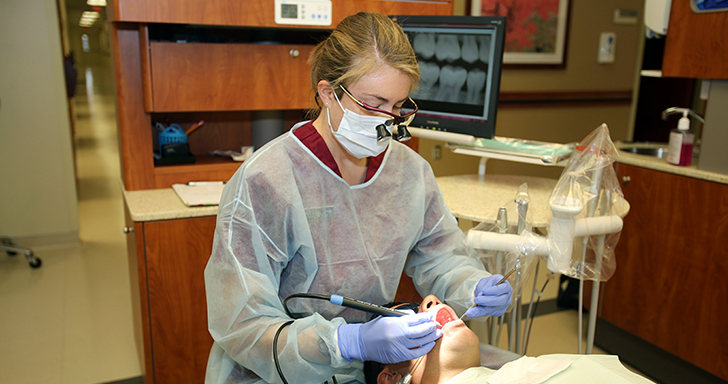
The hygienist will use small hand instruments, an ultrasonic scaler or a combination of both to remove buildup from the teeth and along the gumline.
An ultrasonic scaler makes a buzzing sound and sprays water while it works. You may feel vibration, light scraping and pressure. The dental assistant or hygienist will use suction to remove water and debris.
If your gums are inflamed or there is a large amount of tartar, some areas may feel tender and your gums may bleed slightly. You should not feel sharp pain. Let us know if anything is uncomfortable so we can pause or adjust the approach.
Polishing and Flossing
After the buildup has been removed, the teeth are usually polished with a soft rubber cup and a slightly gritty paste. You will feel gentle pressure and vibration, and you may notice the flavor of the polishing paste.
The hygienist may floss between your teeth to remove any remaining material and check areas that are difficult to clean at home. A fluoride treatment may also be recommended.
After the Cleaning
Your teeth should feel smoother after the appointment. If your gums were inflamed or your teeth were covered by heavier tartar, you may notice mild tenderness or temperature sensitivity for a short time.
You can usually eat, drink, brush and floss normally after a routine cleaning. If fluoride or local anesthetic was used, we will give you any additional instructions that apply.
For more information about caring for your mouth afterward, see our routine cleaning after-care instructions.
When to Contact Us
Contact our office if you develop significant pain or swelling, bleeding that does not settle, or sensitivity that is severe or becoming worse rather than gradually improving.
Beaird Family Dental
Poplar Bluff: (573) 778-0200 · Dexter: (573) 624-8005
This guide was written and reviewed by Dr. Justin Shaw, DMD.
Last reviewed, .