
Why a Filling Is Needed
Bacteria in the mouth produce acids that slowly break down the structure of a tooth.
Once enough tooth structure has been eroded, bacteria can begin progressing deeper into the tooth. This is tooth decay.
When the decay is not very deep, your dentist may decide to monitor the tooth at regular checkups. If the decay has progressed far enough, the damaged tooth structure must be removed and replaced with a filling.
Before the Procedure
Your dentist will examine the tooth and review any relevant X-rays to determine the size and location of the cavity.
A topical numbing gel may be placed on the gum to make the injection more comfortable. Local anesthetic is then administered. You may feel a brief pinch followed by some pressure as the area becomes numb.
Numbness can cause a range of unfamiliar sensations. Your lip, tongue or cheek may feel tingly, heavy or swollen, even though it may not actually be swollen.
Your dentist will check that the area is adequately numb before beginning.
Removing the Decay
Once the tooth is numb, the dentist will use a dental handpiece, commonly called a drill, to remove the decayed tooth structure.
You will hear the sound of the handpiece and feel vibration and light pressure, but you should not feel sharp pain. If you feel discomfort, raise your left hand. The dentist will pause and provide additional numbing if needed.
The handpiece sprays water to keep the tooth cool and wash away debris. The dental assistant will use suction throughout the procedure. You may occasionally notice a small amount of water in your mouth. It is safe to swallow, or you can wait for the assistant to suction it away.
Depending on the size and location of the cavity, the dentist may place small dental tools, bands or wedges around the tooth. You may feel some pressure while these are positioned, but they should not be painful.
Placing the Filling
After all of the decay has been removed, the tooth is prepared for the filling.
An etching material is applied to help the filling bond securely to the tooth. It may taste slightly sour if a small amount touches your tongue.
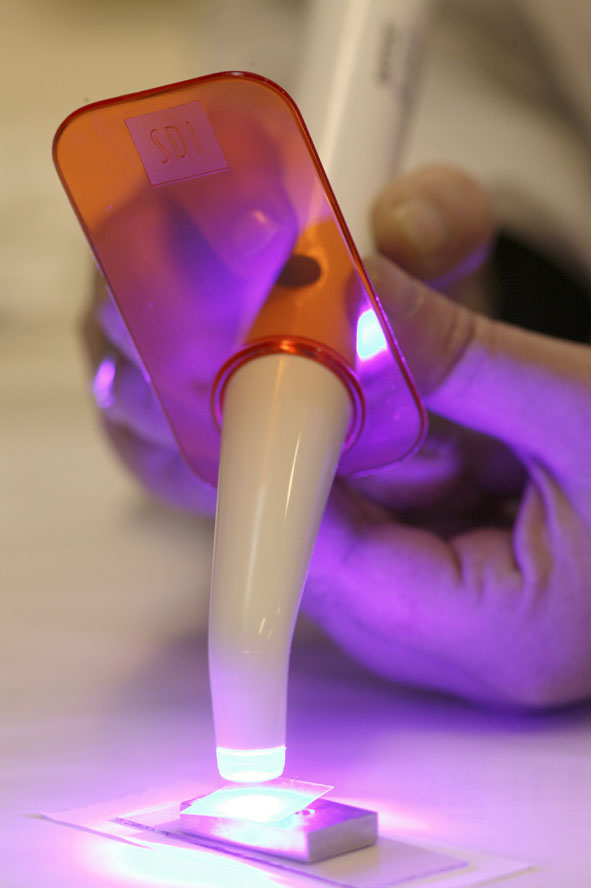
The filling material is then placed and shaped to rebuild the tooth. For a tooth-colored filling, the material is usually placed in layers, with each layer hardened using a special curing light.
Finishing the Filling and Checking Your Bite
Once the filling has been placed, it is shaped and polished so that it feels smooth and fits naturally with the surrounding tooth.
You will be asked to bite gently on a thin sheet of marking paper. This paper leaves colored marks on areas where your teeth make contact, helping the dentist identify and adjust any high spots.
Your bite may be checked several times before the final adjustments are complete. Because your mouth is still numb, the filling may initially feel slightly unfamiliar.
After the Procedure
Your lip, tongue or cheek may remain numb for several hours.
Although the filling itself may be ready for normal use, we recommend waiting until the numbness has worn off before eating. When your mouth is numb, it is easy to accidentally bite your tongue, lip or cheek. You should also be careful with hot foods and drinks because you may not accurately feel their temperature.
Once the numbness is gone, you can usually eat, brush and floss normally unless your dentist gives you different instructions.
Common Sensations After a Filling
Some temporary sensitivity can be normal after a filling, particularly with larger or deeper cavities.
- Mild sensitivity to hot, cold, sweets or pressure.
- Minor tenderness around the tooth or gum.
- Mild jaw soreness from keeping your mouth open.
- A slightly different feeling when you first bite or chew.
These sensations should gradually improve.
When to Contact Your Dentist
Contact your dentist if:
- The tooth hurts when you bite or chew.
- The filling feels higher than the surrounding teeth.
- Sensitivity is severe, is becoming worse or is not gradually improving.
- The filling feels rough, sharp, loose or broken.
- Part or all of the filling falls out.
- You develop persistent, throbbing or spontaneous pain.
- You notice swelling or other signs of infection.
Pain when biting often means the filling needs a minor adjustment. This is generally straightforward to correct.
A tooth that has lost a significant amount of structure may remain more vulnerable to cracking or other problems in the future. Your dentist will let you know if this is a concern for your tooth.
Beaird Family Dental
Poplar Bluff: (573) 778-0200 · Dexter: (573) 624-8005
This guide was written and reviewed by Dr. Justin Shaw, DMD.
Last reviewed, .