
Planning the Treatment
Your dentist will examine your mouth, review your medical history and take X-rays or a three-dimensional scan. These records show the amount of bone available and the position of nearby structures.
If the area does not have enough bone, a bone graft may be recommended before or during implant placement. Your treatment plan will explain the number of implants, the expected stages and the type of final tooth or appliance they will support.
Placing the Implant
Local anesthetic is used to numb the surgical area. You may feel a brief pinch and pressure during the injection. If sedation is planned, follow the separate instructions provided by the office.
The dentist makes a small opening in the gum and prepares a space in the bone for the implant. You may hear the dental handpiece and feel vibration, water, firm pressure and movement.
The implant is placed into the prepared space. A small cover or healing cap may be attached, and stitches may be used around the gum.
You should not feel sharp pain. Raise your left hand if you feel discomfort or would like a break.
Healing Around the Implant
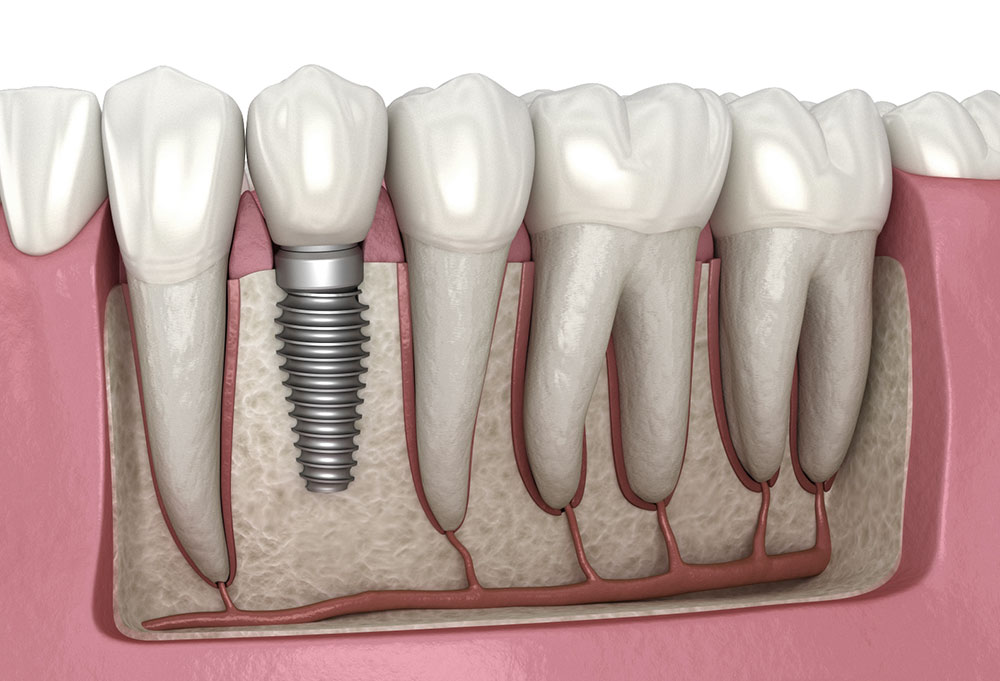
Over the next several months, the bone heals closely around the implant and provides a stable foundation. This process is called integration.
You may have a temporary tooth or removable appliance during healing, depending on the location and treatment plan. Follow the instructions for wearing it so it does not place unwanted pressure on the surgical area.
Follow-up visits allow us to check the gum, the implant and the surrounding bone.
Attaching the Final Tooth
Once the implant is ready, a connector called an abutment is attached. In some cases it is placed during the original surgery; in others, it is attached during a later minor procedure.
A scan or impression is then made for the final crown, bridge or denture. At the delivery visit, the restoration is attached and the fit and bite are checked.
After Implant Surgery
Light bleeding, swelling, bruising and soreness can be normal during the first several days. Your mouth may remain numb for several hours.
For instructions on eating, cleaning and protecting the area, see our implant surgery after-care page.
When to Contact Us
Contact our office if bleeding does not slow with pressure, pain or swelling is severe or becoming worse, you develop fever or drainage, or the implant or healing cap feels loose.
Beaird Family Dental
Poplar Bluff: (573) 778-0200 · Dexter: (573) 624-8005
This guide was written and reviewed by Dr. Justin Shaw, DMD.
Last reviewed, .