
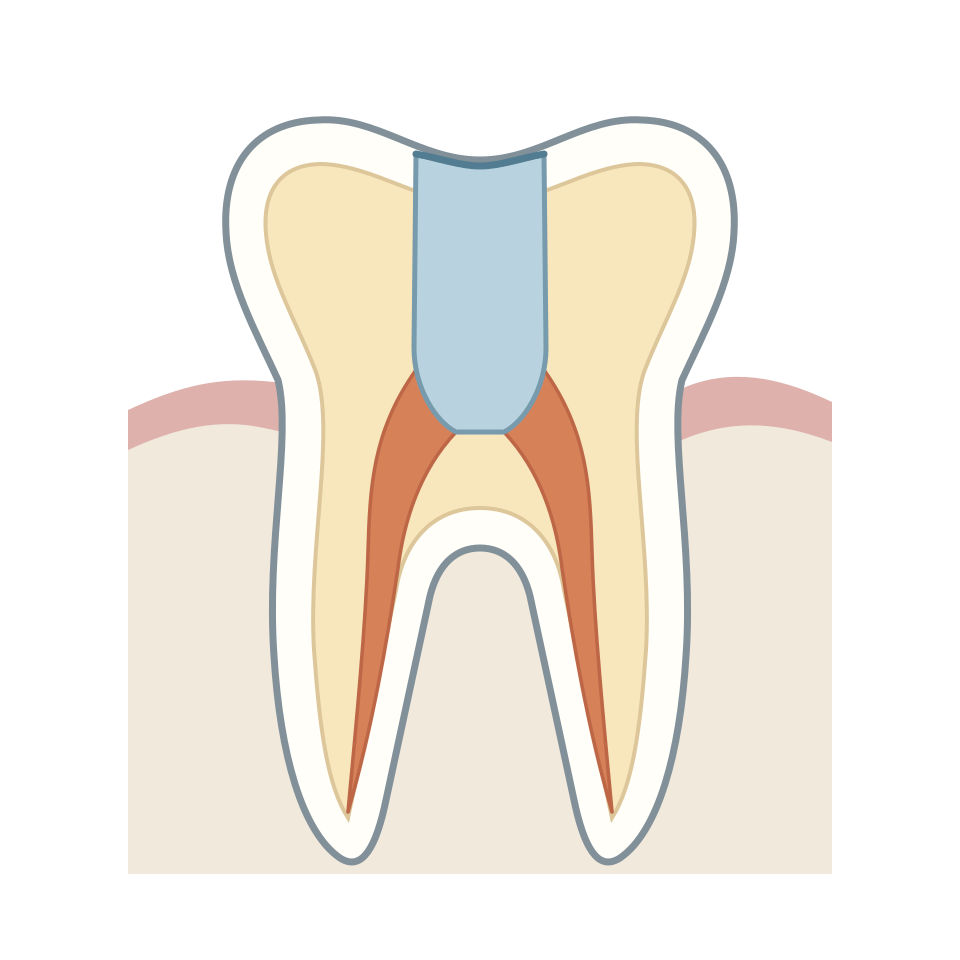
Why a Root Canal Is Needed
Deep decay, a crack, an injury or previous dental work can irritate the soft tissue inside a tooth. This may cause pain, prolonged temperature sensitivity, swelling or tenderness when biting. In some cases, the problem is found on an X-ray before strong symptoms develop.
A root canal removes the damaged tissue and seals the inside of the tooth. It allows the natural tooth to be kept rather than removed.
Before the Procedure
Your dentist will examine the tooth and review X-rays to evaluate the roots and the surrounding bone.
Local anesthetic is used to numb the tooth and nearby tissues. You may feel a brief pinch and pressure during the injection. Your lip, tongue or cheek may feel tingly, heavy or swollen as the area becomes numb.
A small protective sheet called a dental dam is placed around the tooth. It keeps the tooth dry and prevents rinsing solutions or small instruments from entering your mouth. The sheet may feel snug, but you will still be able to breathe normally.
Cleaning the Inside of the Tooth
Once the tooth is numb, the dentist makes a small opening through the top of the tooth. You will hear the dental handpiece and feel vibration, water and light pressure.
Very small instruments are then used to remove the damaged tissue and clean the narrow spaces inside the roots. Rinsing solutions wash away debris while suction keeps the area controlled.
You may feel pressure or movement, but you should not feel sharp pain. Raise your left hand if you feel discomfort or would like a break.
Sealing the Tooth
After the root spaces have been cleaned and shaped, they are filled with a sealing material. The opening in the tooth is then closed with a temporary or permanent filling.
If treatment is being completed over more than one visit, medication may be placed inside the tooth and a temporary filling will protect it between appointments.
After the Procedure
Your mouth may remain numb for several hours. Wait until the numbness has worn off before chewing, and be careful with hot foods and drinks.
The tooth and the tissues around it may feel tender when you bite for several days. This should gradually improve.
A root-canal-treated tooth often needs a crown or another final restoration to protect it from breaking. Until that restoration is completed, avoid chewing hard or sticky foods on the tooth.
For detailed home-care guidance, see our root canal after-care instructions.
When to Contact Us
Contact our office if pain or swelling is severe, symptoms are becoming worse, your bite feels high, the temporary filling comes out, or you develop fever, drainage or a persistent bad taste.
Beaird Family Dental
Poplar Bluff: (573) 778-0200 · Dexter: (573) 624-8005
This guide was written and reviewed by Dr. Justin Shaw, DMD.
Last reviewed, .