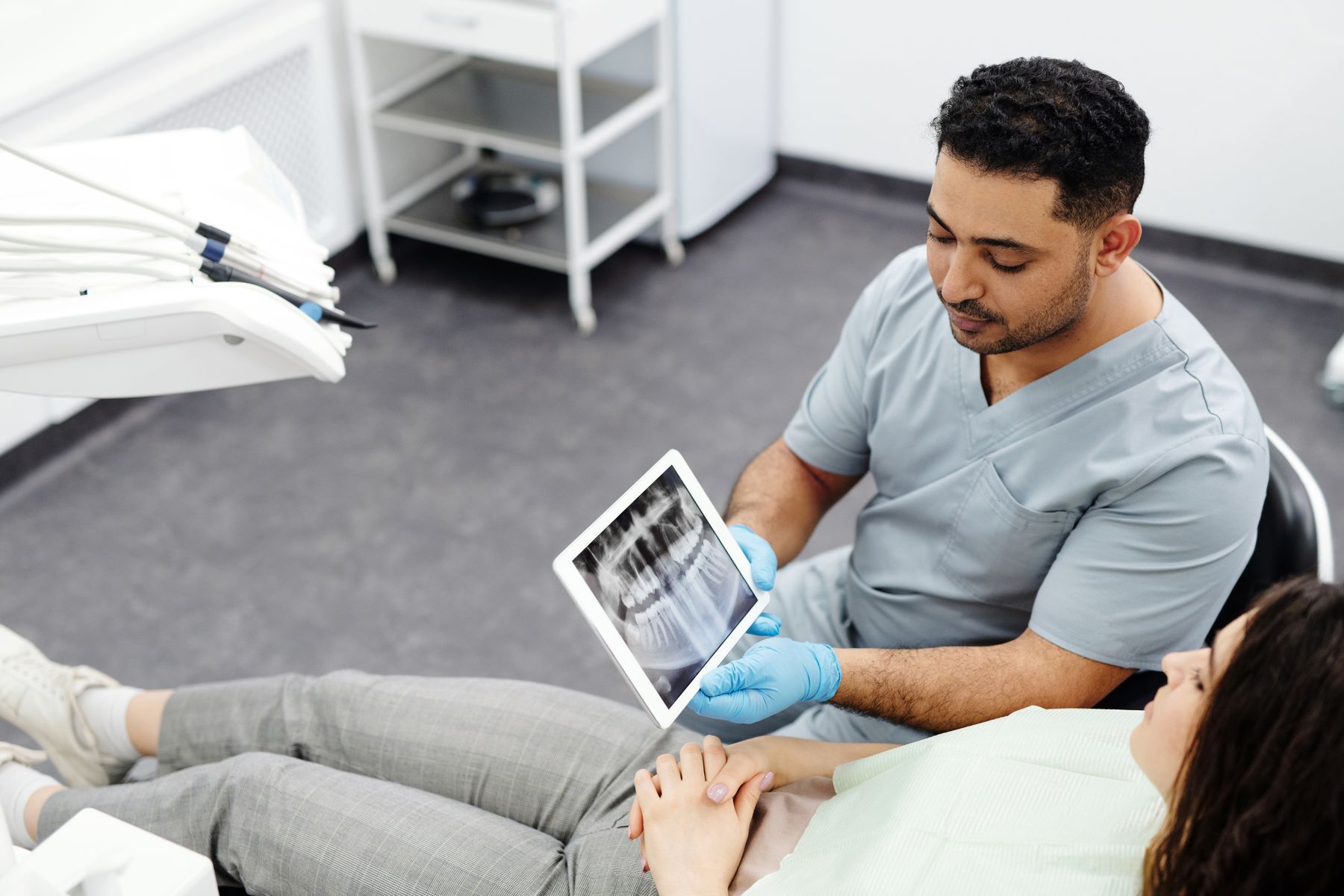
Most urgent dental problems need a dentist rather than a hospital. The exception is when bleeding, swelling or trauma threatens your breathing, swallowing, vision or overall safety.
Use the steps below only while you arrange professional care. They are not a substitute for an examination.
If the office is closed, listen to the voicemail instructions. Do not wait until the next business day for a knocked-out permanent tooth, uncontrolled bleeding or rapidly increasing swelling.
Know where to go—and what to do first.
Medical emergency
Call 911 or go to the nearest emergency room now
You are having trouble breathing, swallowing or speaking.
Swelling is spreading quickly, reaching the eye or neck, or making it difficult to open your mouth.
Bleeding is heavy and will not slow after firm, continuous pressure.
You have a major facial or jaw injury, a possible head injury, loss of consciousness, confusion or severe weakness.
Choosing the right care
When to call us—and when to use the emergency room
A dentist can treat the cause of most tooth pain, broken teeth and localized infections. A hospital is the right place when the problem could threaten your airway, cause dangerous blood loss or involve major facial trauma.
Call Beaird Family Dental
Dental treatment is needed
Knocked-out, broken, cracked or loose tooth
Lost filling, crown or bridge
Severe or persistent tooth pain
Localized gum, cheek or jaw swelling
Bad taste, drainage, fever or pain when biting
Post-treatment pain or bleeding that concerns you
Call either office. If we are closed, follow the instructions on the voicemail.
Emergency room or 911
Medical stabilization is needed
Difficulty breathing, swallowing or speaking
Rapidly spreading swelling or swelling near the eye or neck
Heavy bleeding that does not slow with firm pressure
Suspected broken jaw or serious facial injury
Head injury, loss of consciousness, confusion or severe weakness
Severe illness with facial swelling and fever
The emergency room can stabilize a dangerous medical problem. You may still need follow-up dental treatment afterward.
Avoid making it worse
Four things not to do
No aspirin on the gum.It can burn the tissue.
No household glue.Keep loose dental work and bring it with you.
No heat on swelling.Use a cold compress outside the face.
No waiting on airway symptoms.Breathing or swallowing trouble is an ER emergency.
First-aid steps
What you can do right now
These are the situations where a few immediate actions can protect the tooth, reduce irritation or control bleeding until you are seen.
Time-sensitive
Knocked-out permanent tooth
Pick up the tooth by the crown—the part you normally see. Do not touch the root.
If it is dirty, gently rinse it with water. Do not scrub, dry or wrap it in tissue.
If possible, gently place it back in the socket without forcing it. Do not reinsert a baby tooth.
If it cannot be replaced, keep it moist in milk or an emergency tooth-preservation solution. Do not let it dry out.
Next step: Call a dentist immediately and bring the tooth. The best chance of saving it comes from being seen as quickly as possible, ideally within about 30 minutes.
Protect the area
Broken tooth, filling or crown
Rinse gently with warm water and save any tooth pieces, filling or crown you can find.
Use a cold compress on the outside of the face if there is swelling.
Avoid chewing on that side and protect your tongue from sharp edges.
Do not use household glue or force a crown back into place.
Next step: Call us as soon as possible—especially if the tooth is painful, sharp, loose or sensitive to air or temperature.
Apply pressure
Bleeding after treatment or injury
Place damp gauze or a clean folded cloth directly over the bleeding area.
Bite or press firmly for 20 minutes without lifting it to check.
Sit upright and stay quiet. Do not rinse, spit forcefully or use a straw.
If needed, repeat once with fresh gauze while continuing firm pressure.
Next step: Call us if bleeding keeps returning. Go to the emergency room if it remains heavy, your mouth is filling with blood, or you feel faint or weak.
Reduce irritation
Toothache or localized swelling
Rinse with warm water. If food may be trapped, gently floss between the teeth.
Use a cold compress on the outside of the face. Do not apply heat to swelling.
If you normally take an over-the-counter pain reliever safely, use it exactly as directed on the label.
Do not place aspirin on the tooth or gum, and do not try to pop or drain a swollen area.
Next step: Call us for persistent pain, a bad taste, fever, pain when biting or swelling. A dental abscess needs dental treatment and will not resolve on its own.